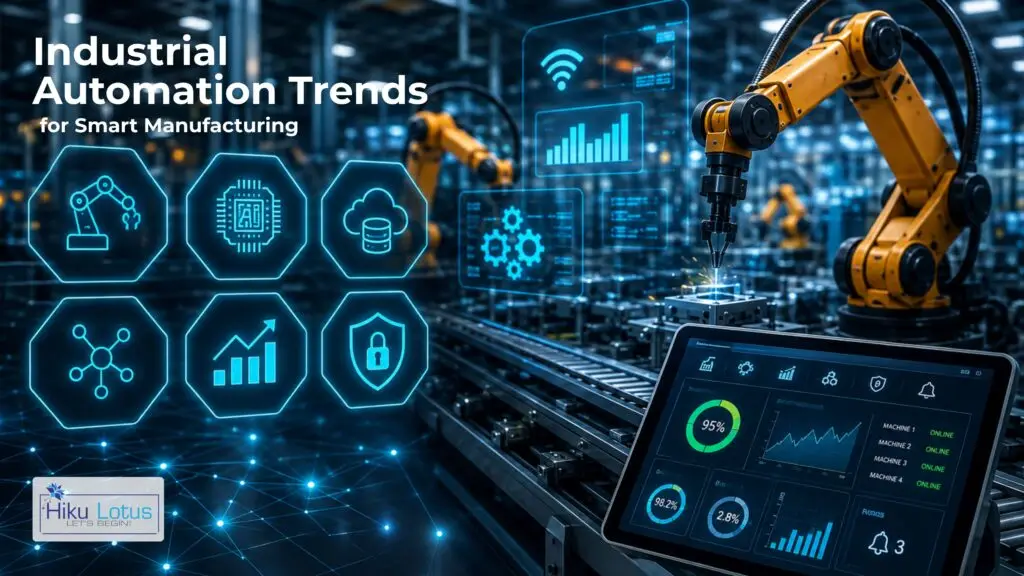
The manufacturing industry is undergoing a significant transformation driven by rapid advancements in industrial automation. Businesses are embracing smart technologies to improve productivity, reduce operational costs, enhance product quality, and remain competitive in an increasingly digital world. From intelligent robotics and Industrial Internet of Things (IIoT) to Artificial Intelligence (AI) and predictive maintenance, automation is reshaping how factories operate.
In this blog, we’ll explore the latest industrial automation trends, their benefits, real-world applications, and how they are enabling the future of smart manufacturing.
What is Industrial Automation?
Industrial automation is the use of control systems, software, sensors, robotics, and communication technologies to operate machinery and production processes with minimal human intervention.
Modern automation systems integrate:
- Programmable Logic Controllers (PLCs)
- Embedded Systems
- Human-Machine Interfaces (HMIs)
- SCADA Systems
- Industrial Robots
- Sensors and Actuators
- Industrial Communication Networks
- Cloud Platforms
- Artificial Intelligence
Together, these technologies create intelligent manufacturing environments capable of monitoring, analyzing, and optimizing production in real time.
Why Smart Manufacturing Matters
Smart manufacturing combines automation, data analytics, and connectivity to create efficient, flexible, and intelligent production systems.
Key objectives include:
- Increased productivity
- Reduced downtime
- Higher product quality
- Lower operational costs
- Improved worker safety
- Real-time decision making
- Sustainable manufacturing
- Faster time-to-market
Manufacturers adopting smart technologies gain greater visibility and control over their operations.
Top Industrial Automation Trends
1. Industrial Internet of Things (IIoT)
The Industrial Internet of Things (IIoT) connects machines, sensors, and equipment through secure communication networks.
Benefits include:
- Real-time equipment monitoring
- Remote diagnostics
- Production tracking
- Energy monitoring
- Data-driven decision making
IIoT enables manufacturers to collect valuable operational data and optimize production processes.
2. Artificial Intelligence (AI) and Machine Learning
AI is transforming industrial automation by enabling machines to analyze data and make intelligent decisions.
Applications include:
- Predictive maintenance
- Quality inspection
- Demand forecasting
- Production optimization
- Defect detection
- Process automation
Machine learning continuously improves system performance based on historical data.
3. Predictive Maintenance
Instead of waiting for equipment to fail, predictive maintenance uses sensors and analytics to detect issues before breakdowns occur.
Advantages include:
- Reduced downtime
- Lower maintenance costs
- Increased equipment lifespan
- Better production planning
- Improved reliability
This approach helps manufacturers maximize asset utilization.
4. Collaborative Robots (Cobots)
Unlike traditional industrial robots, collaborative robots are designed to safely work alongside human operators.
Cobots are ideal for:
- Assembly operations
- Material handling
- Packaging
- Inspection
- Machine tending
They improve productivity while reducing repetitive manual tasks.
5. Edge Computing
Processing industrial data closer to the machine reduces latency and improves response times.
Benefits include:
- Faster decision making
- Lower network traffic
- Improved cybersecurity
- Real-time machine control
- Increased system reliability
Edge computing is becoming essential for modern manufacturing facilities.
6. Digital Twin Technology
A digital twin is a virtual representation of a physical machine or production system.
Manufacturers use digital twins for:
- Process simulation
- Equipment monitoring
- Performance analysis
- Design optimization
- Predictive maintenance
This technology reduces development time and improves operational efficiency.
7. Smart Sensors
Advanced sensors now provide more than simple measurements.
Modern sensors can monitor:
- Temperature
- Pressure
- Vibration
- Flow
- Current
- Humidity
- Position
- Air Quality
Smart sensors improve process accuracy and enable automated decision-making.
8. Industrial Cybersecurity
As factories become increasingly connected, protecting industrial systems is more important than ever.
Cybersecurity measures include:
- Secure communication protocols
- Network segmentation
- User authentication
- Device encryption
- Continuous monitoring
- Regular software updates
A strong cybersecurity strategy protects production systems and sensitive operational data.
9. Cloud-Based Manufacturing
Cloud technology enables centralized monitoring and management of multiple production facilities.
Benefits include:
- Remote access
- Production analytics
- Data backup
- Scalable infrastructure
- Multi-site management
- Performance reporting
Cloud platforms make manufacturing operations more flexible and connected.
10. Sustainable and Energy-Efficient Automation
Modern automation focuses not only on productivity but also on sustainability.
Energy-efficient systems help:
- Reduce power consumption
- Minimize waste
- Lower carbon emissions
- Optimize resource utilization
- Support environmental compliance
Sustainable manufacturing is becoming a competitive advantage.
Applications of Industrial Automation
Automation technologies are widely used across industries, including:
Manufacturing
- Assembly lines
- CNC machines
- Packaging systems
- Quality inspection
Automotive
- Robotic welding
- Paint automation
- Engine assembly
- Material handling
Food & Beverage
- Filling systems
- Packaging
- Conveyor automation
- Process control
Pharmaceuticals
- Batch processing
- Sterile production
- Packaging
- Quality monitoring
Oil & Gas
- Pipeline monitoring
- Remote control systems
- Safety monitoring
- Process automation
Energy & Utilities
- Power distribution
- Renewable energy systems
- Grid monitoring
- Battery management
Gaming & Amusement Equipment
- Interactive game controllers
- Ride safety monitoring
- Ticketing systems
- Motion and lighting control
Benefits of Industrial Automation
Organizations implementing automation experience significant business advantages:
Higher Productivity
Automation increases production speed while maintaining consistent quality.
Improved Product Quality
Automated inspection reduces defects and improves manufacturing accuracy.
Reduced Downtime
Predictive maintenance minimizes unexpected equipment failures.
Enhanced Worker Safety
Dangerous and repetitive tasks can be handled by automated systems.
Better Resource Utilization
Automation optimizes material usage, labor, and energy consumption.
Greater Flexibility
Modern automation systems can quickly adapt to changing production requirements.
Challenges in Smart Manufacturing
Despite its advantages, implementing industrial automation presents several challenges:
- High initial investment
- Legacy equipment integration
- Cybersecurity risks
- Skilled workforce requirements
- Data management complexity
- System interoperability
- Maintenance planning
Working with experienced automation engineers helps overcome these challenges and ensures successful implementation.
The Future of Industrial Automation
The next generation of smart manufacturing will be driven by:
- AI-powered autonomous factories
- Advanced robotics
- 5G-enabled industrial communication
- Autonomous Mobile Robots (AMRs)
- Edge AI
- Industrial Digital Twins
- Smart vision systems
- Sustainable manufacturing technologies
As these innovations mature, manufacturers will achieve higher levels of efficiency, flexibility, and operational intelligence.
Why Choose Hiku Lotus for Industrial Automation Solutions?
At Hiku Lotus, we help businesses embrace Industry 4.0 through innovative automation and electronics engineering solutions. Our expertise spans hardware design, embedded systems, control electronics, and intelligent automation tailored to your operational needs.
Our services include:
- Industrial Automation System Design
- Embedded System Development
- Custom PCB Design
- Industrial Control Electronics
- IoT & IIoT Solutions
- Sensor Integration
- PLC Interface Electronics
- HMI Development Support
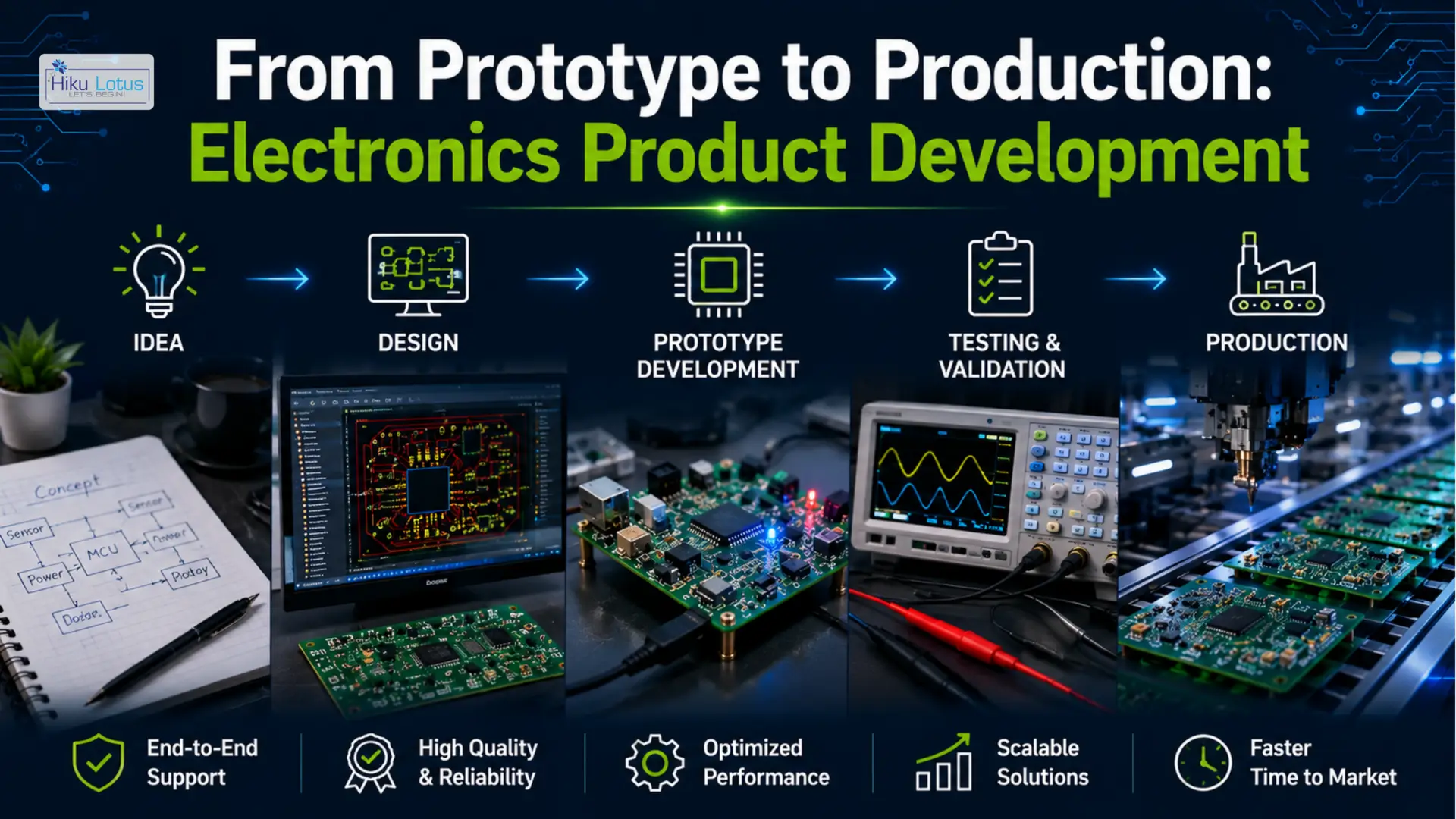
- Electronics Product Development
- Prototype Design & Testing
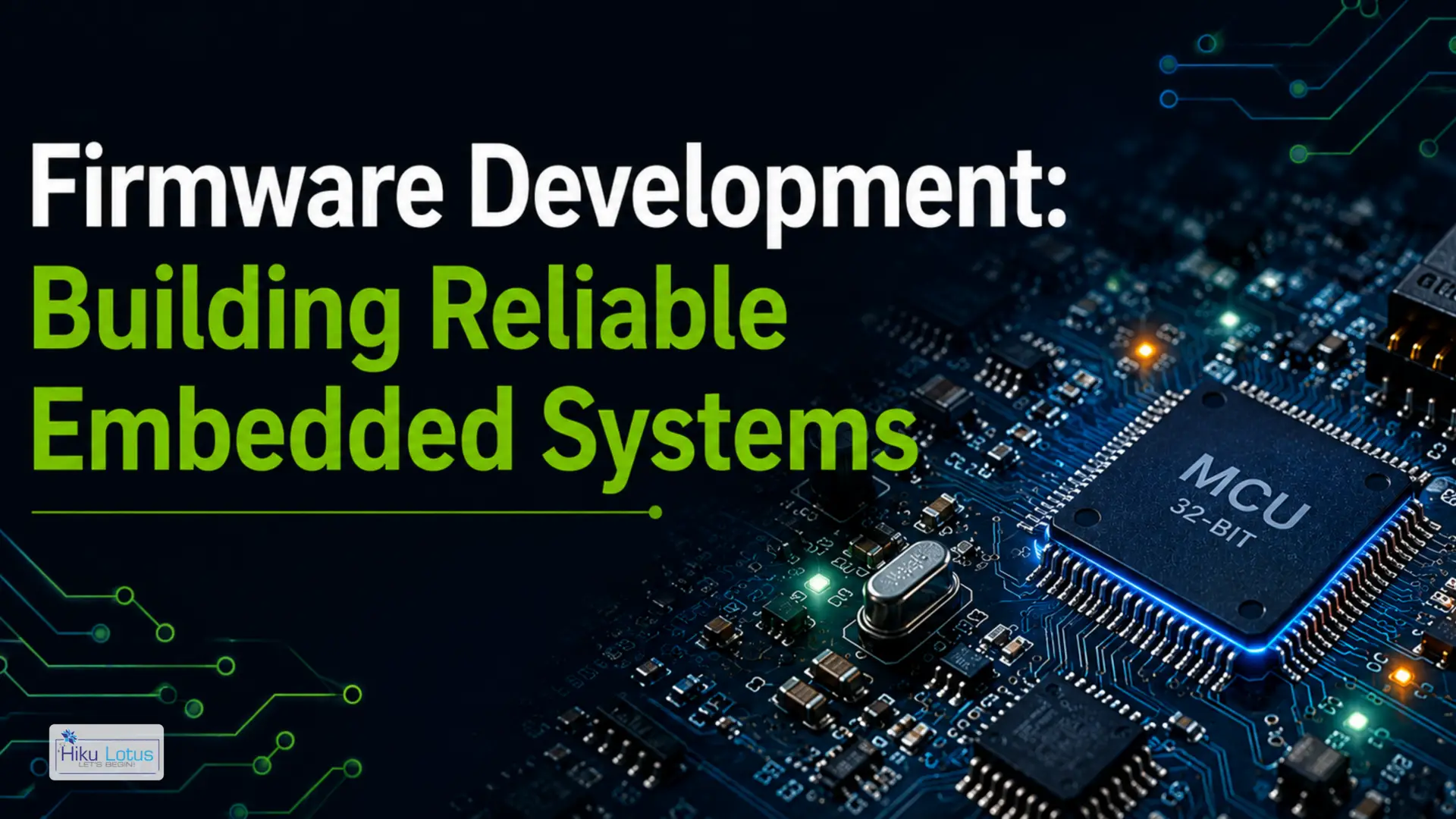
- Firmware Development
- Production Support
Whether you’re automating an existing production line or developing a new smart product, Hiku Lotus delivers reliable, scalable, and future-ready automation solutions.
Conclusion
Industrial automation is no longer just about replacing manual labor—it’s about creating intelligent, connected, and efficient manufacturing ecosystems. Technologies such as IIoT, AI, predictive maintenance, edge computing, and collaborative robotics are redefining how industries operate and compete.
Organizations that invest in smart manufacturing today are better positioned to improve productivity, reduce costs, enhance quality, and stay ahead in an increasingly competitive market.
If you’re planning to modernize your operations with custom automation solutions, Hiku Lotus offers end-to-end expertise in embedded systems, PCB design, industrial electronics, and smart manufacturing technologies.
Talk to Hiku Lotus About Your Industrial Automation Project
Looking to automate your manufacturing process or develop a smart industrial solution? Hiku Lotus specializes in custom industrial automation, embedded electronics, and intelligent control systems. Connect with our team to explore the right solution for your business.
Frequently Asked Questions (FAQs)
What is industrial automation?
Industrial automation is the use of control systems, software, robotics, sensors, and communication technologies to automate industrial processes, improving efficiency, safety, and productivity.
What is smart manufacturing?
Smart manufacturing integrates automation, IIoT, AI, data analytics, and connected systems to optimize production processes and enable real-time decision-making.
What are the latest trends in industrial automation?
Key trends include IIoT, AI, predictive maintenance, collaborative robots (cobots), edge computing, digital twins, smart sensors, cloud manufacturing, and industrial cybersecurity.
How does predictive maintenance improve manufacturing?
Predictive maintenance uses real-time sensor data and analytics to identify potential equipment failures before they occur, reducing downtime and maintenance costs.
Does Hiku Lotus provide industrial automation solutions?
Yes. Hiku Lotus offers custom industrial automation solutions, including embedded system development, PCB design, industrial control electronics, IoT integration, firmware development, and electronics product engineering.