Industrial automation has transformed the way businesses manufacture products, monitor operations, and improve productivity. At the heart of this transformation are embedded systems—specialized computing solutions designed to perform dedicated tasks with high efficiency, reliability, and precision.
From factory automation and robotics to energy management and smart transportation, embedded systems are driving innovation across industries. As the demand for intelligent, connected, and real-time solutions continues to grow, embedded systems have become an essential part of modern industrial applications.
In this blog, we’ll explore what embedded systems are, their key components, applications, benefits, design challenges, and how they are shaping the future of industrial automation.
What is an Embedded System?
An embedded system is a dedicated computer system designed to perform one or more specific functions within a larger mechanical or electrical system. Unlike general-purpose computers, embedded systems are optimized for reliability, speed, low power consumption, and real-time performance.
A typical embedded system consists of:
- Microcontroller (MCU) or Microprocessor (MPU)
- Memory (RAM, Flash, EEPROM)
- Sensors and Actuators
- Communication Interfaces
- Power Management Circuitry
- Firmware or Embedded Software
These systems continuously monitor inputs, process data, and control outputs without requiring user intervention.
Why Embedded Systems Are Essential in Modern Industry
Industrial operations demand:
- High reliability
- Continuous operation
- Real-time decision making
- Energy efficiency
- Accurate process control
- Remote monitoring
- Low maintenance
Embedded systems are specifically designed to meet these requirements while operating in harsh industrial environments.
Key Features of Industrial Embedded Systems
Modern industrial embedded systems offer several important features:
Real-Time Performance
Industrial machines require immediate response to sensor inputs. Embedded systems process information in milliseconds, ensuring accurate machine control.
High Reliability
Industrial equipment often operates 24/7. Embedded systems are built for long operational life with minimal downtime.
Low Power Consumption
Optimized hardware and firmware reduce energy consumption, making embedded systems suitable for battery-powered and energy-efficient applications.
Compact Design
Small form factors allow embedded systems to be integrated into machines with limited space.
Long Product Life
Industrial embedded controllers are designed for years of reliable operation even under demanding conditions.
Core Components of an Industrial Embedded System
A typical industrial embedded solution includes:
Microcontroller or Processor
The processor executes firmware and controls system operations.
Common choices include:
- ARM Cortex-M Series
- STM32 Microcontrollers
- ESP32
- Microchip PIC
- AVR Controllers
- NXP Controllers
- TI MSP430
- Raspberry Pi Compute Module (Industrial Applications)
Sensors
Sensors collect real-time information from machines and environments.
Examples include:
- Temperature Sensors
- Pressure Sensors
- Proximity Sensors
- Capacitive Touch Sensors
- Optical Sensors
- Current Sensors
- Hall Effect Sensors
- Accelerometers
Actuators
Embedded systems control actuators such as:
- Motors
- Solenoid Valves
- Relays
- Pumps
- Servo Motors
- Pneumatic Cylinders
- Hydraulic Systems
Communication Interfaces
Industrial systems communicate using:
- RS-485
- Modbus
- CAN Bus
- Ethernet/IP
- MQTT
- Wi-Fi
- Bluetooth
- Zigbee
- LoRa
- USB
- SPI
- I²C
- UART
Reliable communication enables centralized monitoring and control.
Industrial Applications of Embedded Systems
Embedded systems are used across almost every industrial sector.
Factory Automation
Embedded controllers operate:
- Conveyor systems
- Assembly lines
- Packaging machines
- Pick-and-place robots
- Automated inspection systems
Industrial Robotics
Robots depend on embedded systems for:
- Motion control
- Position feedback
- Collision detection
- Machine vision integration
- Safety monitoring
Process Automation
Industries such as chemical, pharmaceutical, and food processing use embedded systems to regulate:
- Temperature
- Pressure
- Flow
- Mixing
- Dosing
- Filling operations
Energy Management
Embedded systems help monitor and optimize:
- Electrical consumption
- Solar energy systems
- Battery management
- Smart grids
- Power quality
Predictive Maintenance
Modern machines continuously monitor vibration, temperature, and current to predict failures before they occur.
Benefits include:
- Reduced downtime
- Lower maintenance costs
- Increased equipment life
- Improved production efficiency
Smart Agriculture
Embedded systems control:
- Irrigation systems
- Greenhouse automation
- Soil monitoring
- Weather stations
- Livestock monitoring
Healthcare Equipment
Medical devices use embedded systems for:
- Patient monitoring
- Infusion pumps
- Diagnostic equipment
- Imaging systems
- Laboratory automation
Smart Transportation
Applications include:
- Vehicle diagnostics
- Railway signaling
- Fleet management
- Electric vehicle control
- Smart traffic systems
Benefits of Embedded Systems in Industrial Applications
Organizations implementing embedded systems experience significant advantages:
Increased Productivity
Automation minimizes manual intervention and improves production speed.
Improved Accuracy
Precise sensor monitoring reduces manufacturing errors.
Lower Operational Costs
Efficient resource management decreases energy and maintenance expenses.
Enhanced Safety
Embedded safety systems detect abnormal conditions and trigger protective actions.
Remote Monitoring
IoT-enabled embedded systems allow operators to monitor equipment from anywhere.
Scalability
Industrial systems can easily expand with additional sensors, controllers, or communication modules.
Challenges in Industrial Embedded System Design
Developing reliable industrial embedded systems requires careful engineering.
Common challenges include:
- Electromagnetic Interference (EMI)
- Heat Dissipation
- Power Supply Stability
- Cybersecurity
- Long Product Lifecycle Support
- Environmental Protection (Dust, Moisture, Vibration)
- Compliance with Industry Standards
- Real-Time Performance Requirements
Proper hardware design, PCB layout, firmware optimization, and rigorous testing help overcome these challenges.
Emerging Trends in Embedded Systems
The future of industrial embedded systems is driven by technological advancements such as:
- Artificial Intelligence (AI) at the Edge
- Industrial Internet of Things (IIoT)
- Machine Learning for Predictive Maintenance
- Digital Twins
- Edge Computing
- Wireless Industrial Communication
- Cloud Connectivity
- Advanced Human-Machine Interfaces (HMIs)
These innovations enable smarter, more connected, and highly efficient industrial operations.
Why Choose Hiku Lotus for Embedded System Development?
At Hiku Lotus, we design and develop custom embedded solutions tailored to industrial applications. Our expertise spans hardware design, firmware development, PCB layout, communication protocols, and system integration.
Our embedded engineering services include:
- Custom Embedded System Design
- Embedded Firmware Development
- PCB Design & Layout
- Microcontroller-Based Product Development
- Industrial Automation Solutions
- Sensor Integration
- Communication Protocol Implementation
- IoT Device Development
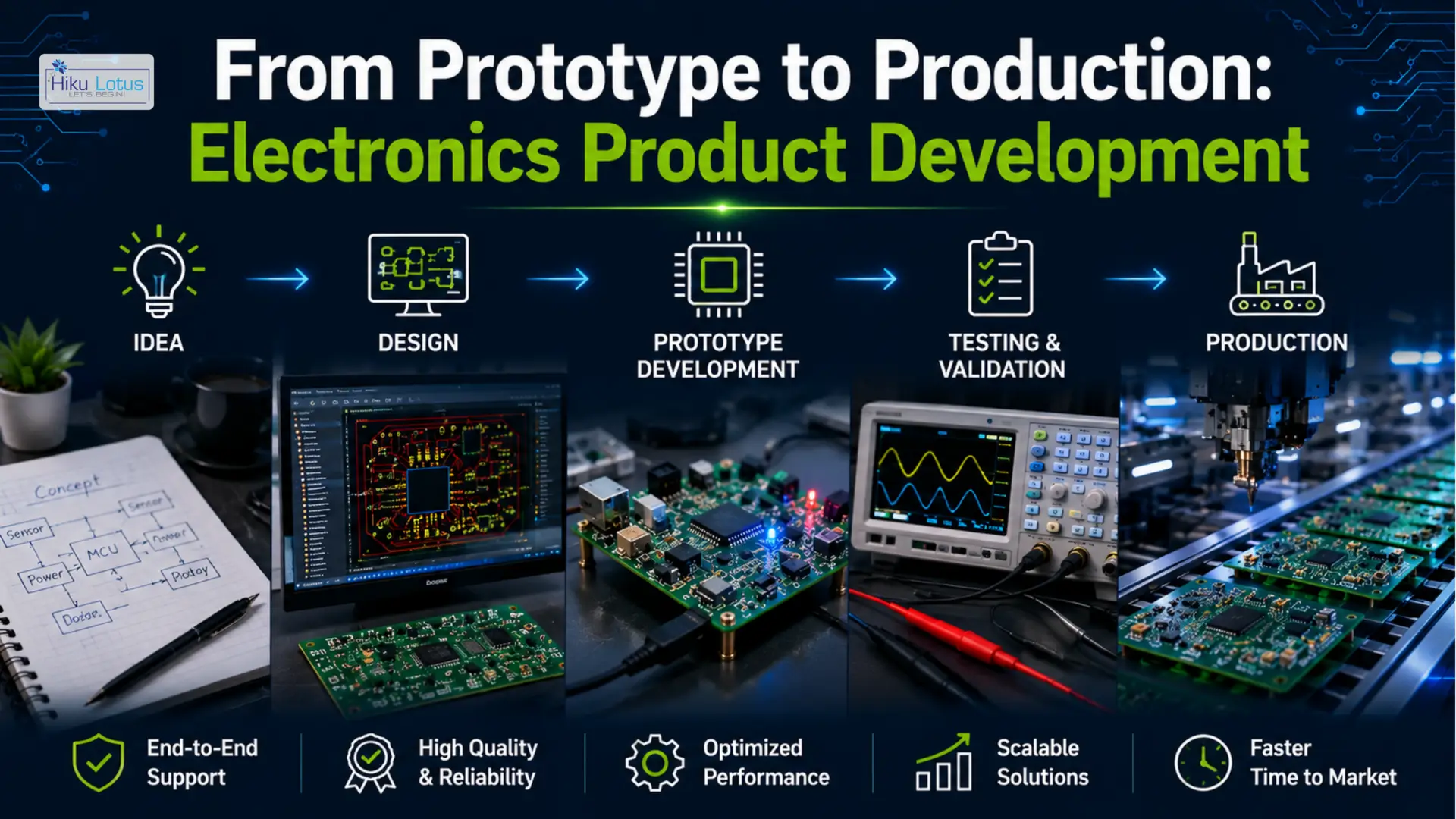
- Prototype Development
- Product Testing & Validation
- Electronics Product Development
Whether you’re building a new industrial product or upgrading an existing system, Hiku Lotus delivers scalable, reliable, and production-ready embedded solutions.
Conclusion
Embedded systems are the foundation of modern industrial automation, enabling intelligent control, real-time monitoring, and efficient operations across diverse industries. From factory automation and robotics to energy management and healthcare, these systems are transforming the way industries operate.
As technologies like AI, IIoT, and edge computing continue to evolve, embedded systems will play an even greater role in shaping the future of industrial innovation.
If you’re looking for a trusted partner to develop custom embedded systems, Hiku Lotus provides end-to-end engineering services—from concept and hardware design to firmware development, testing, and production support.
Talk to Hiku Lotus About Your Embedded System Project
Whether you’re developing a new embedded product or upgrading an existing system, Hiku Lotus provides complete embedded hardware, firmware, and system integration solutions. Contact our experts to discuss your project requirements.
Frequently Asked Questions (FAQs)
What is an embedded system?
An embedded system is a dedicated computing system designed to perform specific functions within a larger device or machine, offering reliable and real-time control.
Where are embedded systems used in industry?
They are widely used in factory automation, robotics, process control, energy management, healthcare equipment, transportation, agriculture, and IoT solutions.
Why are embedded systems important in industrial automation?
They provide precise control, real-time data processing, improved efficiency, reduced downtime, and enhanced safety, making industrial operations more reliable and productive.
What communication protocols are commonly used in embedded systems?
Common protocols include UART, SPI, I²C, CAN Bus, Modbus, RS-485, Ethernet/IP, MQTT, Wi-Fi, Bluetooth, Zigbee, and LoRa.
Does Hiku Lotus develop custom embedded systems?
Yes. Hiku Lotus specializes in custom embedded hardware, firmware development, PCB design, industrial automation, IoT solutions, and complete electronics product development.